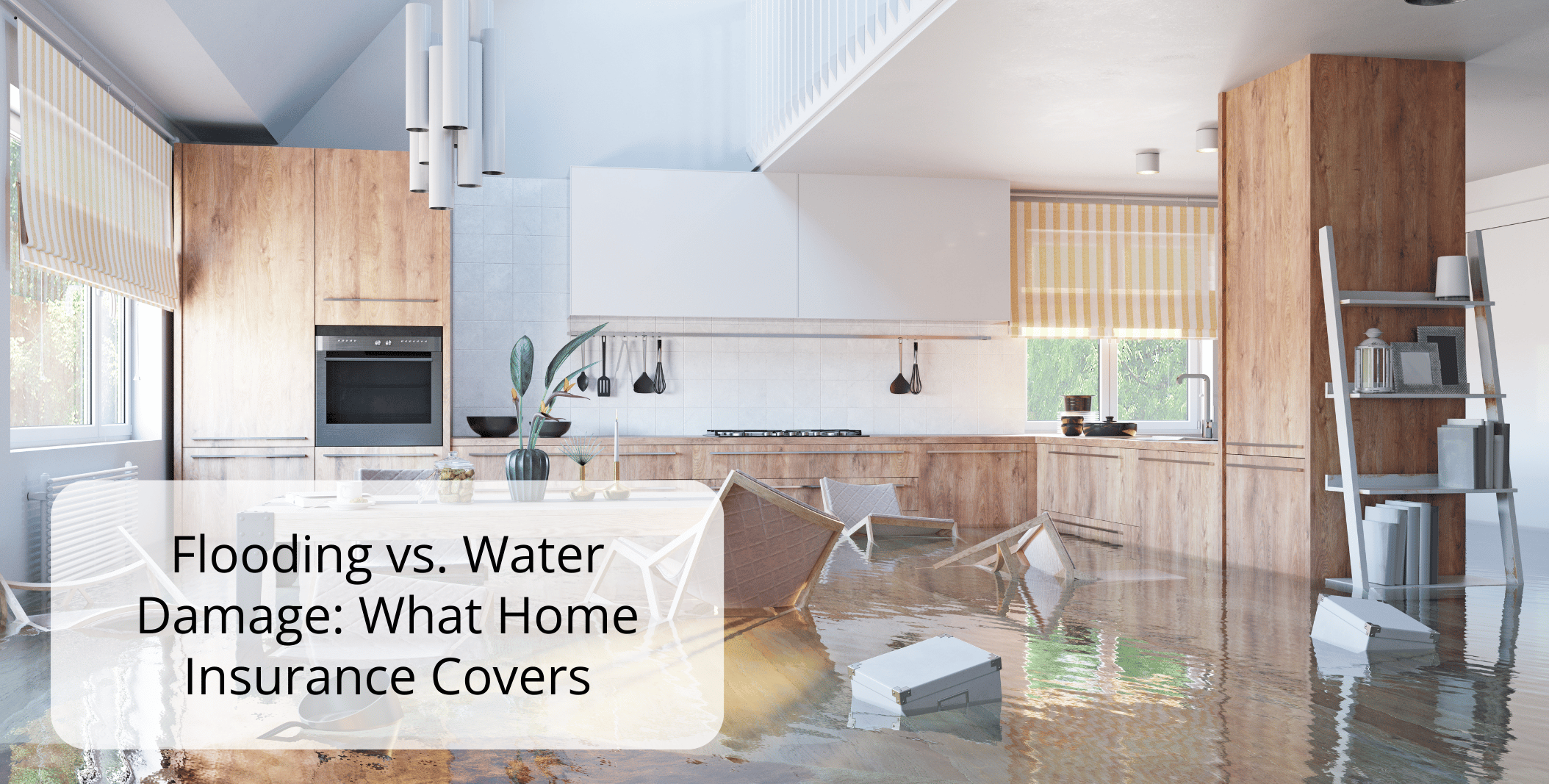
In the world of insurance, “water damage” and “flooding” are not interchangeable terms. While they both involve water entering your home, the source of that water typically determines how a policy may respond. This distinction is one of the most important concepts for a homeowner to understand, as a standard homeowners’ insurance policy generally treats these two events very differently.
What is Typically Considered “Water Damage”?
In many standard policies, “water damage” refers to water that originates from inside the home or from a sudden, accidental discharge of water. Because these incidents are often internal, they are frequently included in standard homeowners coverage.
Examples may include:
- Burst Pipes: A pipe freezes and bursts, or a copper line under a sink suddenly fails.
- Appliance Malfunctions: A washing machine hose breaks or a water heater leaks unexpectedly.
- Roof Leaks: Rainwater that enters through a hole in the roof caused by a sudden event, like a fallen branch or windstorm.
It is important to note that most policies distinguish between “sudden and accidental” damage and “gradual” damage. For instance, a slow leak that has been occurring for months due to a lack of maintenance may not be covered in the same way as a sudden pipe burst.
Defining “Flooding” in Insurance Terms
Insurance providers typically define “flooding” as an external event where water covers normally dry land. This generally involves water that comes from the ground up, rather than from a plumbing fixture or the roof down.
Common examples of flooding usually include:
- Rising Water: An overflowing river, lake, or stream.
- Surface Water: Heavy rainfall that accumulates on the ground and seeps into a basement or through a foundation.
- Mudslides: In certain circumstances, mudflow caused by heavy rain is also classified as a flood event.
The Key Difference: A standard homeowners insurance policy almost always excludes damage caused by flooding. To have protection against these types of events, homeowners typically need to purchase a separate flood insurance policy, often through the National Flood Insurance Program (NFIP) or a private flood insurer.
Special Considerations: Sewer Backup and Seepage
There are some scenarios that fall into a “gray area” and may require additional endorsements to a standard policy.
- Sewer and Drain Backup: If water backs up through a sewer or a sump pump fails, it may not be automatically covered under a standard policy. Many homeowners choose to add a specific “Sewer Backup” endorsement to help manage this risk.
- Seepage and Hydrostatic Pressure: Water that slowly seeps through a foundation wall over time is often considered a maintenance or structural issue rather than an insurance claim. Policies typically do not cover damage that occurs gradually.
Reviewing Your Risk Profile
Every property has a different relationship with water. A home at the top of a hill faces different risks than one located in a coastal area or near a creek. Understanding the nuances between internal water damage and external flooding can help you make more informed decisions about your coverage levels.
Reviewing your policy documents—specifically the exclusions and “Water” sections—can provide clarity on what is protected. Since insurance needs can vary widely based on your location and the age of your home, many people find it helpful to discuss their specific situation with an insurance professional. An independent agent can explain your options for flood insurance and help you determine if additional endorsements might be helpful for your property.
Disclaimer: The information provided in this article is for educational purposes only. This is not an insurance policy or a legal contract. Coverage varies by state, insurance company, and individual policy terms. All claims are subject to the specific terms, conditions, and exclusions of the policy in force at the time of the loss. It is important to consult with a qualified insurance professional for advice tailored to your specific circumstances.